We are constantly updating AnyDesk with new features and improvements. Here, you will find the steps for updating AnyDesk to the latest version on various operating systems.
💡 NOTE
When you update the AnyDesk client, your existing AnyDesk ID and settings from the previous version will remain unchanged.
Updating AnyDesk on different OS
🚨 IMPORTANTThe instructions below only apply to standard clients. For custom clients, please see Updating custom clients.
You can update AnyDesk on Windows automatically or manually, depending on your preferences.
Enabling automatic updates
To configure automatic updates:
Open AnyDesk and navigate to Settings > Access.
💡 For AnyDesk 7 or earlier, navigate to Settings > Security > Updates.
In the Automatic Updates section, select one of the following options:
Disabled - turn off automatic updates. You will need to update AnyDesk manually.
Enabled - Stable Channel - receive updates after they have been available in the Main channel for several weeks, allowing additional time to identify and address potential issues based on user feedback.
Enabled - Main Channel (recommended) - receive regular updates and improvements automatically.
Enabled - Beta Channel - try upcoming features before general release. Pre-release versions may contain bugs or stability issues.

We always recommend selecting the automatic updates, specifically Main Channel, as you will always have the latest stable version of AnyDesk installed on your device.
Manually updating AnyDesk
If automatic updates are disabled, you can manually install a newer version of AnyDesk.
To update an already installed client manually:
Download the latest version of AnyDesk from our website or download your custom client from the my.anydesk portal.
Run the downloaded file.
AnyDesk will automatically detect the older version and prompt you to update.
💡 NOTE
To check whether automatic updates are enabled, navigate to Settings > Access > Automatic Updates. If Disabled is selected, automatic updates are turned off.
You can update AnyDesk on macOS automatically or manually, depending on your preferences.
Enabling automatic updates
🚨 Automatic updates are available in AnyDesk for macOS version 9.8.0 and later.
To configure automatic updates:
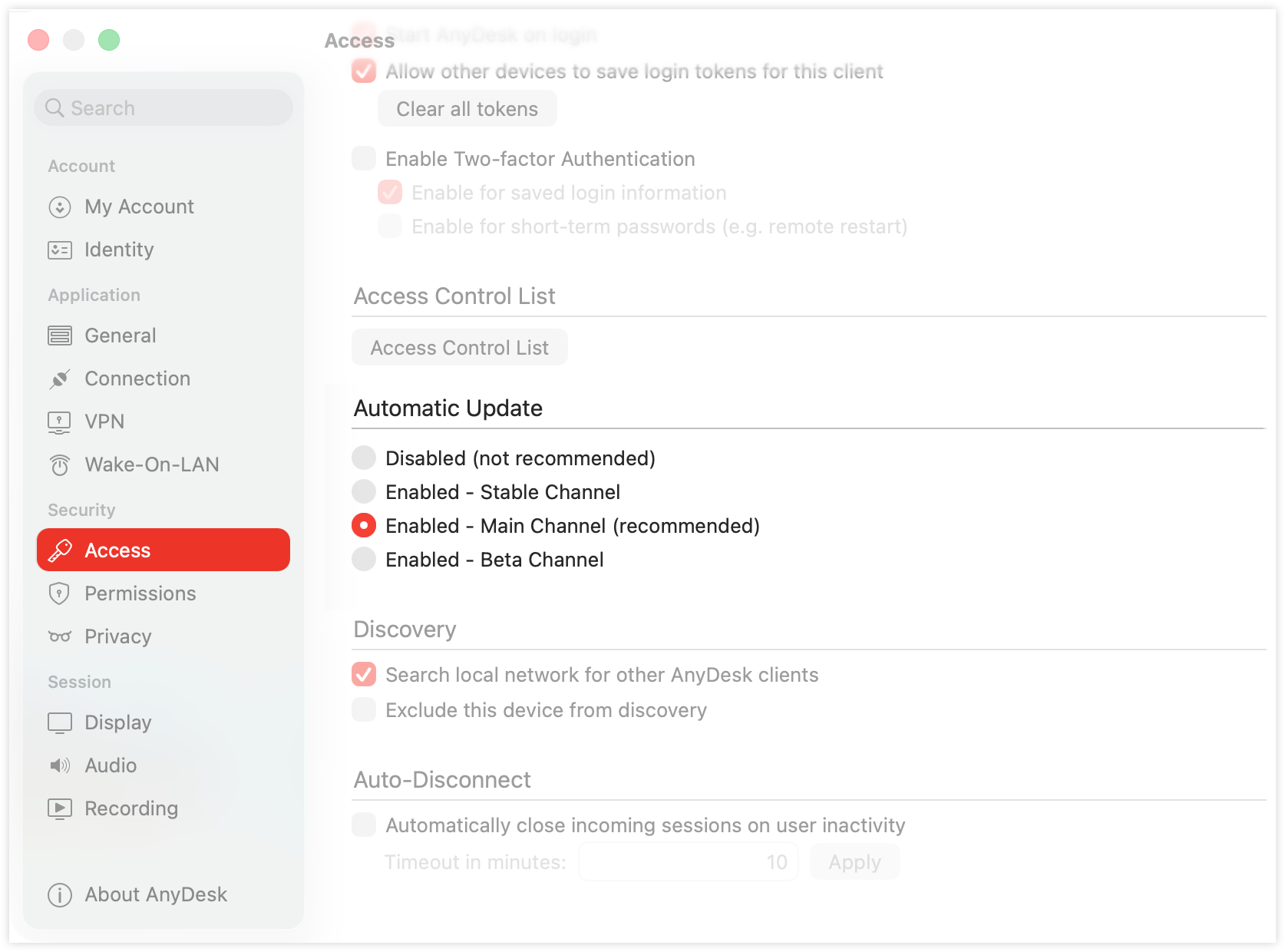
Open AnyDesk and navigate to Settings > Access.
In the Automatic Updates section, select one of the available options.
Disabled - turn off automatic updates. You will need to update AnyDesk manually.
Enabled - Stable Channel - receive updates after they have been available in the Main channel for several weeks, allowing additional time to identify and address potential issues based on user feedback.
Enabled - Main Channel (recommended) - receive regular updates and improvements automatically.
Enabled - Beta Channel - try upcoming features before general release. Pre-release versions may contain bugs or stability issues.
Manually updating AnyDesk
You can also update AnyDesk manually by downloading and installing a newer version. This replaces the existing installation while preserving your configuration.
To update AnyDesk on macOS:
Download the latest version of AnyDesk from our website or a custom client from your my.anydesk portal.
Open the downloaded
.dmgfileIn the installer window, double-click the AnyDesk application to open it.
In the AnyDesk window, click Install Now.
When prompted, confirm that you want to reinstall AnyDesk and accept the Terms & Conditions.
AnyDesk will replace the existing version with new one.
AnyDesk on Linux can be updated manually using an installer or through your system's package manager. If the AnyDesk repository is configured, updates can also be installed automatically, depending on your system's update settings.
Updating AnyDesk via the package manager
If you installed AnyDesk using the official DEB Repository or RPM Repository, you can update it through your system's package manager.
When automatic system updates are enabled, newer AnyDesk versions can be installed automatically along with other application updates.
Alternatively, you can update AnyDesk manually by running the appropriate command:
Disctribution | Command |
Debian / Ubuntu |
|
RHEL / CentOS |
|
Fedora |
|
SUSE |
|
Updating AnyDesk on Linux using the installer
If you installed AnyDesk manually without configuring a repository, you can update it by downloading a newer version.
Download the latest AnyDesk version from our website or a custom client from your my.anydesk portal.
Run the downloaded installer.
When prompted, uninstall the current version of AnyDesk.
After the uninstallation is complete, run the installer again to install the updated version.
To update AnyDesk on iOS devices, open the App Store, search for AnyDesk, and tap Update if a new version is available.
To update AnyDesk on Android devices, open the Google Play Store, search for AnyDesk, and tap Update if a newer version is available.
Alternatively, you can manually download the latest .apk from our website and install it directly on your device. Make sure to enable Install unknown apps in your Android settings if required.
Updating custom clients
Custom AnyDesk clients do not support automatic updates. When a new version is available, a notification appears in the main AnyDesk window.
The update process depends on whether your custom client is Public or Private.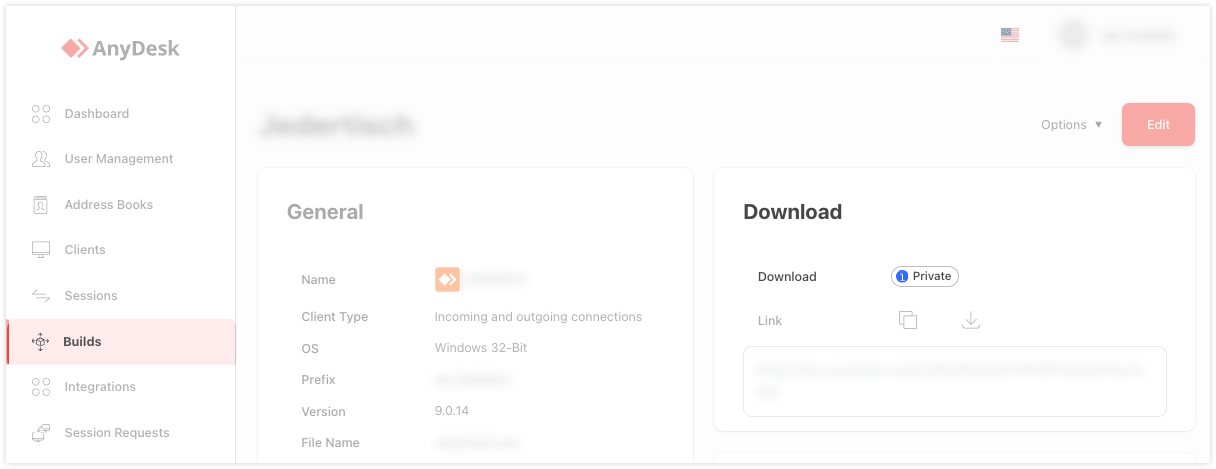
Updating public custom clients
If Download Availability is set to Public for your custom client in the my.anydesk portal, users can download updated versions of the custom client directly from the update notification.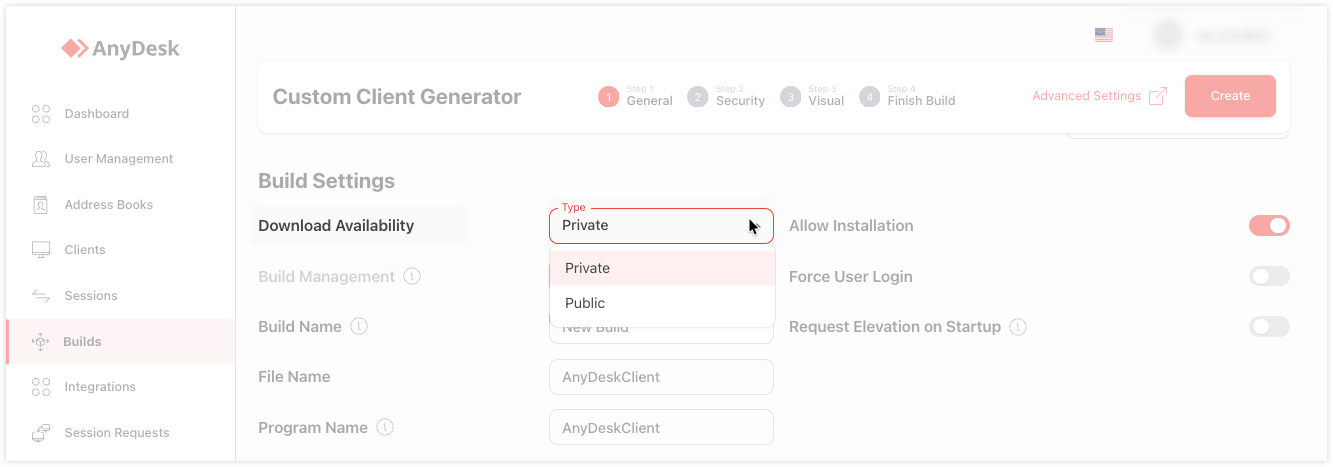
To update a public custom client:
Click the update notification in the main AnyDesk window to download the latest version.
Run the downloaded installer to update the existing client.
Updating private custom clients
If Download Availability is set to Private, the custom client cannot be downloaded through a public link. The AnyDesk account owner must download and distribute the updated version.
To update a private custom client:
Sign in to the my.anydesk portal.
Navigate to Builds and download the updated custom client.
Distribute the installer to the target devices and install the update.
💡 NOTE
You can check available versions of your custom clients on the Builds page in the my.anydesk portal.
Updating a remote client
You can remotely update AnyDesk during an active remote session.
🦉 The remote device should be running with elevated/admin privileges to allow installation or updates. For more details, see this article.
To do that:
Connect to the remote device using AnyDesk.
While in a session, initiate the update or installation process.
The session will temporarily disconnect during the update. After installation, AnyDesk restarts and becomes available again for reconnection.
💡 NOTE
Ensure Unattended Access is configured so that after the update, AnyDesk is accessible even without a user present.